
Peanut Shell Supply and Purchasing
Peanut shells are the light, bulky shells left when peanuts are cracked and the kernels removed; they are used as boiler fuel, pellet feedstock, animal bedding and compost material. Biyolink collects peanut shells from processing plants, verifies them with analysis and delivers them to industrial plants — and buys from producers who have shells to sell.
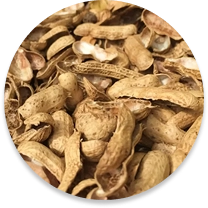
What Are Peanut Shells and Where Do They Come From?
Peanuts grow underground inside their shells. After harvest the dried peanuts are cracked at plants producing shelled peanuts and the shell is separated; roughly a quarter of the weight of an in-shell peanut is shell. The shell is light, fibrous and bulky, and since it comes from the soil it can carry some soil with it.
Most of Türkiye’s peanuts grow in the Çukurova region, mainly in Adana and Osmaniye; production has also grown in Şırnak in recent years, and Hatay, Kahramanmaraş, Antalya and Aydın are among the other growing provinces. The harvest is mainly in September–October, and cracking is busiest in the months after it.
Typical Technical Values
| Property | Typical value |
|---|---|
| Net calorific value | About 3,500–4,100 kcal/kg depending on moisture |
| Moisture | 6–10% |
| Ash | 3–7% (rises with soil content) |
| Bulk density | About 130–150 kg/m³ loose; over 600 kg/m³ as pellets |
| Form | Bulk, light shells; can be baled or pelletised |
These are typical ranges from published sources; actual values vary by lot, source and moisture. We share a laboratory analysis of every lot with our quote.
What Are Peanut Shells Used For?
Peanut shells are used as animal bedding and, in limited amounts, as roughage, and as garden mulch and compost material. They are also a fuel; but being very light, they are often pelletised or briquetted before travelling any distance. Their ash content is higher than that of walnut or hazelnut shells, so the boiler’s ash handling must suit it, or the shells should be blended with other biomass.
- Raw material for pellets and briquettes
- Blended fuel in biomass boilers and power plants
- Alternative fuel in cement kilns
- Animal bedding and compost
Transport and Delivery
Peanut shells are very light, so a loose load fills the truck by volume long before it reaches its weight limit. Over short distances they travel loose on walking-floor or high-sided trailers; over longer distances baling or pelletising is more economical. They can go mouldy if they get wet, so they should be covered in transit and stored indoors. Every shipment is recorded with a waybill and a weighbridge ticket.
What Determines the Price of Peanut Shells?
Because peanut shells are bulky, their price depends heavily on the form and the distance. We build our quote around:
- Moisture, ash and soil content (laboratory analysis)
- Form: loose, baled or pelletised (tonnage per run)
- Volume and delivery schedule
- Distance from the collection area to the delivery point
Have Peanut Shells to Sell?
Biyolink buys peanut shells from your processing plant or warehouse. Sign up to the marketplace for free and list them; share the volume and location and we will send our price and plan the haulage.
Frequently Asked Questions
What is the calorific value of peanut shells?
Published sources give a net calorific value of about 3,500–4,100 kcal/kg depending on moisture. It falls as ash and soil content rise; we share a laboratory analysis of every lot with our quote.
Do peanut shells burn well?
Yes — dry shells light easily and burn fast. Being light and bulky, they are hard to feed evenly into a boiler, so industry often pelletises or briquettes them or burns them blended with other biomass. They leave more ash than wood, so the ash handling must suit them.
Can peanut shells be used as fertiliser?
Not on their own, but they are good for the soil: as mulch they keep moisture in, in compost they are a carbon source, and as they break down they add organic matter. They decompose slowly, so composting them first gives better results.
Can peanut shells be used as animal feed?
To a limited extent. High in fibre and low in nutritional value, they are used in small proportions as roughage. Shells for feed must be dry and free of mould; mouldy shells are a risk to animal health.
How can I sell my peanut shells?
Sign up to our marketplace for free and create a listing, or message us on WhatsApp. Tell us the volume, the location and whether the shells are loose or baled.
How much does a tonne of peanut shells cost?
The price depends on moisture, ash, form, volume and delivery point, so we do not publish a fixed price. Tell us the volume and delivery location for a current quote — or, if you have peanut shells to sell, list them and we will send our price.
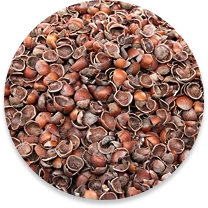 Hazelnut Shells
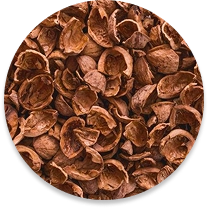 Walnut Shells
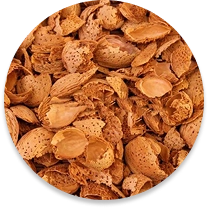 Almond Shells
 Pistachio Shells
 Apricot Kernel Shells
 Peach Kernel Shells
 Sour Cherry Stones
 Rice Husk
 Olive Pomace