
Rice Husk Supply and Purchasing
Rice husk is the outer shell separated when paddy is milled into rice. Light, dry and produced all year, it is used as boiler fuel, animal bedding and a source of silica. Biyolink collects rice husk from rice mills and delivers it in bulk or in big bags.
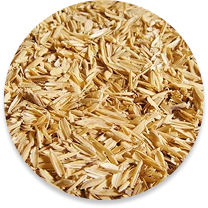
What Is Rice Husk, and Where Does It Come From?
About a fifth of a paddy grain is husk. It is removed when the paddy is milled, so it is produced all year according to the mill’s schedule rather than the harvest season.
In Türkiye the main sources are rice mills in Edirne (İpsala, Uzunköprü), Balıkesir (Gönen), Samsun (Bafra), Çorum (Osmancık) and Sinop. Steady industrial supply means collecting from more than one mill.
Typical Technical Values
| Property | Typical value |
|---|---|
| Net calorific value | About 3,000–3,500 kcal/kg |
| Moisture | 8–12% |
| Ash | 15–20% (mostly silica) |
| Bulk density | About 100–150 kg/m³ |
| Form | Bulk, fine and light husks |
These are typical ranges from published sources; actual values vary by lot, source and moisture. We share a laboratory analysis of every lot with our quote.
Where Is Rice Husk Used?
Rice husk is dry and uniform, so it burns easily, but its ash content is very high. It belongs in boilers with strong ash handling, with ash management planned from the start. The silica-rich ash left after burning can be used in cement and building materials.
- Biomass boilers with strong ash handling
- Blended fuel
- Poultry bedding
- Raw material for pellets and briquettes
Transport and Delivery
Rice husk is so light that trucks fill by volume long before weight; it travels in bulk in high-volume closed or covered trucks, or in big bags. With low tonnage per run, delivery distance has a marked effect on price.
What Determines the Price of Rice Husk?
With rice husk, transport often matters more than the product itself:
- Delivery distance — haulage is a large share because husk is light
- Packaging: bulk or big bags
- Moisture and foreign matter
- Volume and delivery schedule
We Buy Husk From Your Rice Mill
Biyolink buys the rice husk from your mill. Sign up to the marketplace for free and list it; share the monthly volume and where your mill is and we will send our price.
Frequently Asked Questions
What is the calorific value of rice husk?
Published sources give rice husk a net calorific value of about 3,000–3,500 kcal/kg. At 15–20% its ash content is higher than other biomass; we share an analysis of every lot.
Where can I buy rice husk?
Rice husk comes from rice mills. For steady industrial supply, Biyolink collects from several mills and delivers to your plant.
What is rice husk ash used for?
Most of the ash left after burning is silica; it can be used as an additive in cement, concrete and building materials.
How can I sell my rice husk?
Sign up to our marketplace for free and create a listing, or message us on WhatsApp. Tell us the monthly volume and where your mill is.
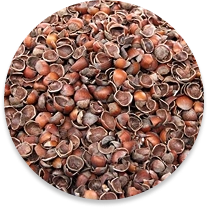 Hazelnut Shells
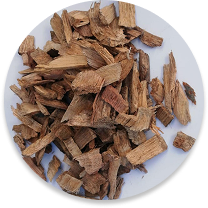 Wood Chips
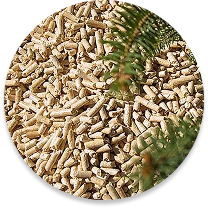 Pine Pellets
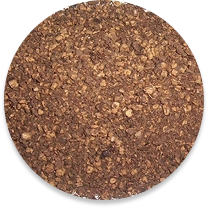 Olive Pomace
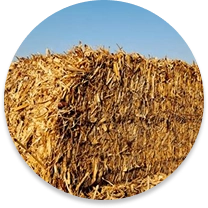 Corn Stalks
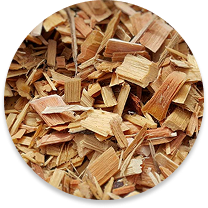 Sawdust
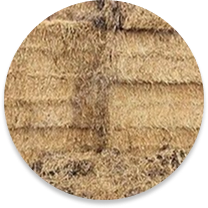 Stained Straw