
Pine Pellet Fuel Supply
With a standard size, low moisture and a high calorific value, pine pellets are the easiest biomass fuel to run in automatically fed boilers. Biyolink supplies industrial plants with pine pellets by the tonne, verifies quality with laboratory analysis and delivers in big bags or in bulk.
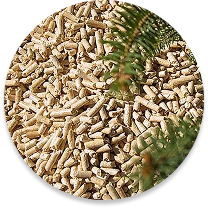
What Are Pine Pellets?
Pine pellets are made by drying pine sawdust and wood residues and compressing them under high pressure into cylinders, usually 6–8 mm in diameter. The wood’s own lignin binds the pellet during compression; no additives are needed.
The same product is also sold as cat litter; this page is about pine pellets used as industrial fuel. Fuel pellet quality is graded under ENplus and ISO 17225-2: classes A1, A2 and B for residential use and I1, I2 and I3 for industry.
Typical Technical Values
| Property | Typical value |
|---|---|
| Net calorific value | About 4,000–4,500 kcal/kg |
| Moisture | Below 10% |
| Ash | 0.7–3% (by class; A1 lowest) |
| Diameter | 6–8 mm |
| Bulk density | About 600–700 kg/m³ |
These are typical ranges from published sources; actual values vary by lot, source and moisture. We share a laboratory analysis of every lot with our quote.
Where Are Pine Pellets Used?
Pellets carry the same energy as wood chips in far less volume, which makes them ideal for fully automatic plants with limited storage.
- Automatically fed pellet boilers and burners
- Heating for large buildings such as hotels, hospitals and schools
- Steam and hot water at food, textile and chemical plants
- Greenhouses and drying plants
Transport and Delivery
Pine pellets travel in big bags or in bulk by blower tanker and are transferred to a silo at the plant. They break down if they get wet, so they must be stored dry and covered; the share of dust and broken pellets created in transit is part of quality control.
What Determines the Price of Pine Pellets?
Pine pellets are priced by the tonne, and the price depends on:
- Quality class (ash and fines)
- Packaging: big bags or bulk
- Volume and delivery schedule; demand rises in winter
- Distance to the delivery point
Do You Produce Pellets?
Biyolink buys the pine pellets you produce. Sign up to the marketplace for free and list them; share your quality certificates and capacity and we will send you our price.
Frequently Asked Questions
What is the calorific value of pine pellets?
Published sources give a net calorific value of about 4,000–4,500 kcal/kg; because moisture is low, it varies little from lot to lot. We share an analysis of every lot.
What is the difference between ENplus A1 and industrial pellets?
A1 is the lowest-ash class, defined for residential use. Industrial classes (I1–I3) allow more ash and can be the more economical choice for large boilers. We pick the class that fits your boiler specification.
Pellets or wood chips?
Pellets are dense, dry and uniform and suit small and medium automatic boilers. Wood chips lower the cost per unit of energy in large boilers. Your feeding system and storage space decide.
Can pellets sold as cat litter be burned as fuel?
The raw material may be the same, but fuel pellets are graded separately by moisture, ash and durability. Check the analysis values before burning pellets in a boiler.
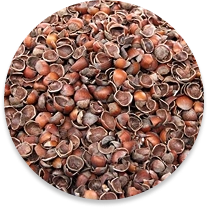 Hazelnut Shells
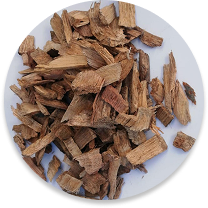 Wood Chips
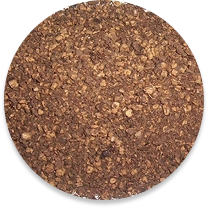 Olive Pomace
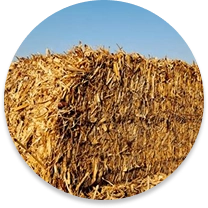 Corn Stalks
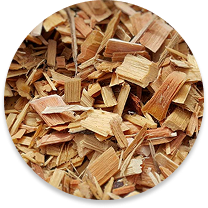 Sawdust
 Stained Straw
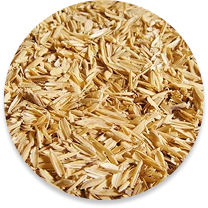 Rice Husk