
Rice Straw Bale Supply
Rice straw is the stalks and leaves left in the paddy field after the rice harvest. Unlike rice husk, which comes from the mill, it stays in the field and is baled after the harvest. Biyolink collects rice straw in bales, verifies moisture and ash with analysis and delivers it to industrial plants — and buys from farmers with rice straw to sell.
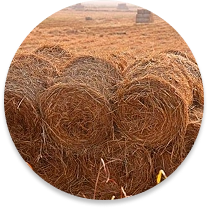
What Is Rice Straw, and When Is It Collected?
The combine takes the paddy — rice grain still in its husk — and leaves the stalks and leaves in the field. Once dry, the straw is raked and baled. Rice straw contains more ash and silica than wheat straw, so it needs more care both as feed and as fuel.
In Türkiye the largest source is Edirne (İpsala, Uzunköprü, Meriç, Enez); Samsun (Bafra, Çarşamba), Çorum (Osmancık), Balıkesir (Gönen) and Sinop are also important rice areas. The harvest is in September–October; the straw is collected before the weather turns and stored dry and covered.
Typical Technical Values
| Property | Typical value |
|---|---|
| Net calorific value | About 2,700–3,200 kcal/kg depending on moisture |
| Moisture | 8–15% (in dry bales); higher at harvest |
| Ash | 12–20% (mostly silica) |
| Bale | Small or large square bales; weight varies with density |
| Form | Bales; shredded on site before feeding |
These are typical ranges from published sources; actual values vary by lot, source and moisture. We share a laboratory analysis of every lot with our quote.
What Is Rice Straw Used For?
Rice straw is used as roughage and bedding for livestock and as mulch in gardens, and has been studied as a raw material for paper and building materials. In industry it is a fuel. Its ash content is high and mostly silica, and with potassium and chlorine it carries a risk of slagging and fouling. It belongs in straw-capable boilers with strong ash handling or in blends with other biomass.
- Alternative fuel in cement kilns
- Biomass boilers and power plants designed for bales
- Blends with wood chips, stalks and similar fuels
- Raw material for pellets and briquettes
Transport and Delivery
Bales travel by truck under tarpaulin and are unloaded by forklift or bale clamp. Paddy fields are wet, so straw baled before it has dried properly goes mouldy; dry bales should be stored under cover and off the ground. Every shipment is recorded with a waybill and a weighbridge ticket.
What Determines the Price of Rice Straw?
The price depends on that year’s harvest, bale quality and haulage distance. We build our quote around:
- Bale moisture and ash content
- Bale weight and density (tonnage per run)
- Distance from the collection area to the delivery point
- Feed-market demand and that year’s straw supply
Have Rice Straw to Sell?
Biyolink buys rice straw from your field or already baled. Sign up to the marketplace for free and list it, or message us on WhatsApp; share the number of bales and location and we will send our price and plan the haulage.
Frequently Asked Questions
Is rice straw the same as rice husk?
No. Rice straw is the stalks and leaves left in the field after the harvest and is collected in bales. Rice husk is the thin outer shell removed from the grain when paddy is milled into rice, and it moves in bulk. Both are used as fuel, but their form, source and season differ.
What is the calorific value of rice straw?
Published sources give rice straw a net calorific value of about 2,700–3,200 kcal/kg depending on moisture. At 12–20% its ash content is well above wheat straw’s; we share an analysis of every lot.
What is rice straw used for?
Roughage and livestock bedding, mulch and compost; baled and collected, it becomes fuel for industrial boilers and cement kilns. Burning it in the field is prohibited in Türkiye and fined; baling and selling the straw is legal and earns the farmer an income.
Can rice straw be used as animal feed?
Yes, but it is a low-value roughage: low in protein and high in silica and lignin. It is mostly used as part of a ration or as bedding; lots with little feed value find a better use as fuel.
How can I sell my rice straw?
Sign up to our marketplace for free and create a listing, or message us on WhatsApp. Tell us where the bales are, how many there are and roughly what they weigh.
How much does rice straw cost?
The price depends on that year’s harvest, bale moisture and density, volume and delivery point, so we do not publish a fixed price. Tell us the volume and delivery location for a current quote — or, if you have rice straw to sell, list it and we will send our price.
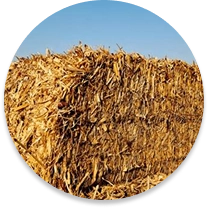 Corn Stalks
 Stained Straw
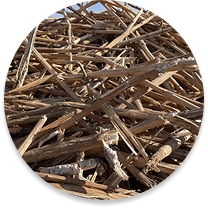 Sunflower Stalks
 Cotton Stalks
 Dried Tomato Stalks
 Canola Stalks