
Canola Stalk Fuel Supply
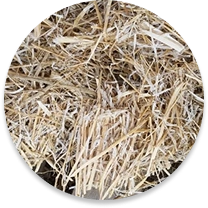
Canola stalks — the stems, branches and empty pods left in the field after the canola (rapeseed) harvest — are also called canola straw. Coarser and woodier than cereal straw, they become an industrial fuel once baled and collected. Biyolink collects canola stalks in bales, verifies moisture and ash with analysis and delivers them to industrial plants — and buys from farmers with canola stalks to sell.
What Are Canola Stalks, and When Are They Collected?
The combine takes the seed and leaves the stems, branches and empty pods in the field. They are often chopped by the combine and spread on the field; if they are to be collected, they are left in a windrow and baled once dry. Canola is the name for rapeseed varieties bred to be low in erucic acid and glucosinolates; as a fuel, the stalks are the same product.
Most of Türkiye’s canola is grown in Thrace — Tekirdağ, Edirne and Kırklareli — and it is also sown in Marmara provinces such as Çanakkale. The harvest is in June–July and the stalks are collected right after it; for year-round use the bales are stored dry and covered.
Typical Technical Values
| Property | Typical value |
|---|---|
| Net calorific value | About 3,000–3,700 kcal/kg depending on moisture |
| Moisture | 10–20% (in dry bales) |
| Ash | 4–8% |
| Bale | Square or round bales; weight varies with density |
| Form | Bales; shredded on site before feeding |
These are typical ranges from published sources; actual values vary by lot, source and moisture. We share a laboratory analysis of every lot with our quote.
What Are Canola Stalks Used For?
Canola stalks are worked back into the soil and used as livestock bedding; their feed value is low. In industry they are a fuel and a raw material for pellets. Their calorific value is close to or slightly above cereal straw’s, but sulphur and chlorine vary widely from lot to lot and some measurements put them above cereal straw. They are therefore assessed against the boiler specification and blended with other biomass where needed.
- Alternative fuel in cement kilns
- Biomass boilers and power plants designed for bales
- Blends with wood chips and other stalks
- Raw material for pellets and briquettes
Transport and Delivery
Bales travel by truck under tarpaulin and are unloaded by forklift or bale clamp. Canola is harvested in early summer, so the stalks are usually collected dry; for year-round delivery the bales should be stored under cover and off the ground. Every shipment is recorded with a waybill and a weighbridge ticket.
What Determines the Price of Canola Stalks?
The price depends on the harvest season, bale quality and haulage distance. We build our quote around:
- Bale moisture and ash (laboratory analysis)
- Bale weight and density (tonnage per run)
- Distance from the collection area to the delivery point
- Volume and delivery schedule
Have Canola Stalks to Sell?
Biyolink buys canola stalks from your field or already baled. Sign up to the marketplace for free and list them, or message us on WhatsApp; share the volume and location and we will send our price and plan the haulage.
Frequently Asked Questions
What is the calorific value of canola stalks?
Published sources give canola (rapeseed) stalks a net calorific value of about 3,000–3,700 kcal/kg depending on moisture. Sulphur and chlorine vary from lot to lot, so we share an analysis of every lot.
What are canola stalks used for?
Worked into the soil they add organic matter, and they are used as livestock bedding; baled and collected, they become fuel for industrial boilers and cement kilns and a raw material for pellets and briquettes.
Can canola straw be fed to cattle?
It can, but it is a coarse, woody feed with low protein and digestibility, so it is mostly used as bedding or fuel. If you plan to include it in a ration, ask an animal nutritionist.
Are canola and rapeseed stalks the same?
Yes, as a fuel they are the same product. Canola is the name for rapeseed varieties bred to be low in erucic acid and glucosinolates; the stalks of both are called canola or rapeseed straw.
When are canola stalks collected?
Canola is harvested in June–July; the stalks are baled right after the harvest, once dry. For year-round delivery the bales are stocked during the season.
How can I sell my canola stalks?
Sign up to our marketplace for free and create a listing, or message us on WhatsApp. Tell us where the field or the bales are and roughly how much there is.
 Corn Stalks
 Stained Straw
 Sunflower Stalks
 Cotton Stalks
 Rice Straw
 Dried Tomato Stalks