
Cotton Stalk Fuel Supply
Cotton stalks are the woody stems pulled from the field after the cotton harvest. Lower in ash than straw and most stalks and close to wood in structure, they are one of the better crop-residue fuels. Biyolink collects cotton stalks baled or chipped after uprooting, verifies moisture and ash with analysis and delivers them to industrial plants — and buys from farmers with cotton stalks to sell.
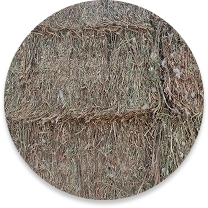
What Are Cotton Stalks, and When Are They Pulled?
At the cotton harvest the bolls are picked and the woody stalks are left in the field. After the harvest the stalks are pulled out with their roots by stalk pullers or broken up by stalk shredders. Pulled stalks dry in the field for a few days and are then baled or chipped.
Türkiye’s main cotton regions are South-eastern Anatolia (above all Şanlıurfa, as well as Diyarbakır and Mardin), the Aegean (Aydın, İzmir) and Çukurova (Adana, Hatay). The harvest runs from September to November and the stalks are mostly pulled from October to December. Under pink bollworm control rules, collecting, moving and storing the stalks follows a regulated calendar.
Typical Technical Values
| Property | Typical value |
|---|---|
| Net calorific value | About 2,900–3,700 kcal/kg depending on moisture |
| Moisture | About 30–40% when pulled; 10–20% once dried in the field |
| Ash | 3–7%; soil carried on the roots raises it |
| Bale | Round or square; weight varies with density and moisture |
| Form | Woody stalks, baled or chipped; shredded on site before feeding |
These are typical ranges from published sources; actual values vary by lot, source and moisture. We share a laboratory analysis of every lot with our quote.
What Are Cotton Stalks Used For?
Cotton stalks are chopped and ploughed back into the soil, burned as household fuel in villages and studied as a raw material for particleboard; their most common industrial use is fuel. With a woody structure and relatively low ash, they are burned baled or chipped in biomass boilers and power plants and made into pellets and briquettes. Soil carried on the roots raises ash and wear, so separating soil during pulling and loading matters.
- Biomass power plants and industrial boilers
- Alternative fuel in cement kilns
- Raw material for pellets and briquettes
- Blended fuel with other biomass
Transport and Delivery
Cotton stalks travel baled or chipped in bulk by truck. Moving and storing the stalks is subject to Türkiye’s pink bollworm control rules, so we plan transport and any paperwork before shipping; every shipment is recorded with a waybill and a weighbridge ticket.
What Determines the Price of Cotton Stalks?
The price depends on the uprooting season, how clean the stalks are and the haulage distance. We build our quote around:
- Moisture and soil/ash content (laboratory analysis)
- Form: bales or chips
- Distance from the collection area to the delivery point
- Volume and delivery schedule
Have Cotton Stalks to Sell?
Biyolink buys cotton stalks pulled, baled or chipped. Sign up to the marketplace for free and list them, or message us on WhatsApp; share the volume and location and we will send our price and plan the haulage.
Frequently Asked Questions
What is the calorific value of cotton stalks?
Published sources give cotton stalks a net calorific value of about 2,900–3,700 kcal/kg depending on moisture. Dry stalks score higher, while soil on the roots lowers it; we share an analysis of every lot.
What are cotton stalks used for?
They can be chopped and ploughed into the soil; collected, they become fuel for biomass power plants and industrial boilers and a raw material for pellets and briquettes. Their woody structure makes them one of the better crop-residue fuels.
Can cotton stalks be baled?
Yes. Pulled stalks dry in the field for a few days and are then pressed into round or square bales, or chipped and moved in bulk. Dry, soil-free bales burn better and store longer.
When should cotton stalks be pulled and delivered?
Stalks are mostly pulled after the harvest, from October to December. Collecting, storing and moving them follows a calendar set by Türkiye’s pink bollworm regulation; check the current dates with your provincial agriculture directorate. We plan deliveries around that calendar.
How can I sell my cotton stalks?
Sign up to our marketplace for free and create a listing, or message us on WhatsApp. Tell us where the field or the stalks are, roughly how much there is and whether they have been pulled.
How much do cotton stalks cost?
The price depends on the season, stalk moisture and cleanliness, volume and delivery point, so we do not publish a fixed price. Tell us the volume and delivery location for a current quote — or, if you have cotton stalks to sell, list them and we will send our price.
 Corn Stalks
 Stained Straw
 Sunflower Stalks
 Rice Straw
 Dried Tomato Stalks
 Canola Stalks