
Fish Waste Supply and Sourcing
Fish waste is the heads, frames, guts, skin and trimmings left by fish processing and filleting plants, fish farms and fish markets. Rich in protein and oil, it is not a fuel but a raw material for fishmeal and fish oil, feed, fertiliser and biogas. Biyolink buys fish waste from its producers and delivers it to fishmeal, feed, fertiliser and biogas plants permitted to process it.
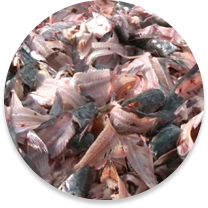
What Is Fish Waste and Where Does It Come From?
When fish is filleted, cleaned or canned, a large share of its weight is separated as heads, backbones (frames), guts, skin and scales. These by-products spoil quickly, so they must be kept chilled or processed promptly. As animal by-products, their collection, transport and processing are subject to the relevant regulations and permits.
In Türkiye, aquaculture is concentrated in Muğla, İzmir and Elazığ: sea bass and sea bream are farmed mainly along the Aegean coast, and trout in inland waters, above all Elazığ, and in the Black Sea. Much of the fishmeal and fish oil industry sits on the Black Sea coast, where anchovy fishing is concentrated.
Typical Technical Values
| Property | Typical value |
|---|---|
| Moisture | Mostly about 55–80% |
| Protein | About 11–20% of wet weight |
| Fat | About 1–25% of wet weight; higher in the guts of oily species |
| Ash (bone) | About 1–12% of wet weight; highest in heads and frames |
| Form | Wet and perishable; chilled, frozen or ensiled |
These are typical ranges from published sources; actual values vary by lot, source and moisture. We share a laboratory analysis of every lot with our quote.
What Is Fish Waste Used For?
The most valuable use of fish waste is fishmeal and fish oil: the waste is cooked and pressed, the oil is separated, and the rest is dried and ground. Fishmeal goes into aquafeed and animal feed, fish oil into feed and supplements. Fish waste is also a raw material for pet food, fish silage and protein hydrolysates, liquid fish fertiliser and compost. Its methane potential in biogas plants is high, but fat and nitrogen can upset the process, so it is co-digested with other wastes. With its high moisture and protein, it is not used as fuel.
- Fishmeal and fish oil plants
- Feed and pet food producers
- Organic fertiliser and compost producers
- Biogas plants (co-digestion)
Transport and Delivery
Fish waste spoils quickly, so it travels without delay in refrigerated or sealed, closed-body trucks; lots that must wait are frozen or acid-ensiled. As an animal by-product, both the sending and the receiving site must hold the relevant registrations and permits, and shipments must be documented. Every shipment is recorded with a waybill and a weighbridge ticket.
What Determines the Price of Fish Waste?
The price of fish waste depends on freshness and what the lot contains; fresh waste fit for fishmeal and oil is not worth the same as waste bound for biogas. We build our quote around:
- Freshness and cold chain (time since processing)
- Species, mix of parts, protein and fat content
- Volume and a regular removal schedule
- Distance from the site to the delivery point
Looking for a Buyer for Fish Waste?
Biyolink buys the fish waste from your processing plant, farm or fish market. Sign up to the marketplace for free and list it; tell us the species, daily or weekly volume and how it is stored, and we will send our price. We plan the collection and haulage.
Frequently Asked Questions
What is fish waste?
Fish waste is the heads, frames, guts, skin, scales and trimmings separated when fish is processed. It counts as an animal by-product and is used for fishmeal, feed, fertiliser and biogas. In biology lessons, fish waste means what fish excrete (mostly ammonia); this page is about processing waste.
How is fishmeal made?
Fish or fish waste is cooked and pressed to separate the liquid; fish oil is recovered from the liquid, and the solids are dried and ground into fishmeal. Published figures put the raw material needed for one tonne of fishmeal at about 4–5 tonnes. Fishmeal is used mainly in aquafeed and animal feed.
Can fish waste be used as fertiliser?
Yes. Fish waste is composted, or liquefied with enzymes or acid, into an organic fertiliser rich in nitrogen and phosphorus; the products sold as liquid fish fertiliser are made this way. Spreading fresh waste straight onto the soil causes odour and pest problems.
Can fish waste be used for biogas?
Yes; its protein and fat give it a high methane potential. But high nitrogen and fat can upset the process when it is fed alone, so it is co-digested with animal manure or crop residues in a balanced ratio.
Can fish waste be burned as fuel?
No, it is not a suitable fuel: it is mostly water and high in protein and bone, so burning it is inefficient and problematic for emissions. The value of fish waste lies in fishmeal, oil, feed and fertiliser, and its energy value in biogas.
How can I sell my fish waste?
Sign up to our marketplace for free and create a listing, or message us on WhatsApp. Tell us the species, what the waste contains, the daily or weekly volume, how it is stored and where your site is.
 Poultry Litter
 Cattle Bedding
 Seaweed
 Algae